Sunrise on Keweenaw Bay

Sunrise on Keweenaw Bay

Monday, September 2, 2013

How to get some glory... (I reveal my Olympic aspirations!)

+ J. M. J. +

Homily Outline for the 22nd Sunday in Ordinary Time,Year C

In our Gospel, at first glance Jesus seems to be giving some canny advice on how to get ahead… if you choose a lower spot than you may well deserve, the host may bring you up higher, increasing your honor. This is clearly better than being pushed lower by over-reaching. It is pleasant to be honored, especially when there is an audience. It is unpleasant to be demoted, especially in front of a crowd.

One place in our world where we see a lot of glory, but also the public consequences of failure, is in sports. When I was in middle-school and high-school, I remember watching the summer and winter Olympic Games with considerable interest. I liked to see who got the most medals; I liked to follow U.S. athletes in various events. I’m not sure exactly how old I was, but there was even a period where I imagined myself as an Olympic athlete! I had a plan…even though I was in a lot better shape back then, it wasn’t because I thought I had enormous athletic gifts! I noticed there were some events that weren’t enormously popular, and where the competitors were essentially unknown. I noticed that in some of these events the U.S. competitors often seemed to be weak, rarely winning medals. Here was my big chance! I imagined that if I mastered one of these lesser known sports, there would be less competition, and I could go to the Olympic games, even if no fame resulted! That was my big plan… to be on the U.S. fencing team, or the horse-jumping team, or the badminton team! I’m not saying any of these are easy… but I thought I might have a shot! Perhaps each of us here has at one time or another imagined acquiring glory or fame, the admiration of our peers. Perhaps some of you have experienced this! Notice that Jesus doesn’t tell His listeners to eschew or reject honor… quite the contrary, He’s giving them a strategy to acquire it! The same pattern is present in our first reading from the Book of Sirach… we are invited to live humbly, but also told that this will result in being loved and finding favor with God.

The problem with our hearts is not that we desire glory and honor and love! This is the Buddhist analysis of the world’s brokenness… suffering is caused by desire, and so by eliminating desire, suffering too must end. This is not at all the teaching of Christ… much suffering results when we attempt to fulfill our desire in false ways, but Christ is not the end of all desire, but the fulfillment of all that our hearts long for!

In our psalm we see the fruit of encountering God… the just rejoice and exult, they sing. God gives us a home, He leads us from imprisonment to prosperity, and we are filled and restored with a bountiful inheritance.

The glory that God desires to give us is beautiful and mysteriously depicted in our second reading from the Letter to the Hebrews:
…you have approached Mount Zion and the city of the living God, the heavenly Jerusalem, and countless angels in festal gathering, and the assembly of the firstborn enrolled in heaven, and God the judge of all, and the spirits of the just made perfect, and Jesus, the mediator of a new covenant, and the sprinkled blood that speaks more eloquently than that of Abel.
We are called to glory, and this gift is offered to us in Christ. We are called to be instruments of God’s grace so that all whom we meet might also be called to glory! While it is true that we seek glory in false ways, I also think that very often we settle for much less than God offers us, very often we resign ourselves to far, far less than we are promised. C.S. Lewis has a beautiful essay titled “The Weight of Glory,” and as I have read and reread it over the years, one of his final statements always strikes me to the heart:
It is a serious thing to live in a society of possible gods and goddesses, to remember that the dullest and most uninteresting person you can talk to may one day be a creature which, if you saw it now, you would be strongly tempted to worship, or else a horror and corruption such as you now meet, if at all, only in a nightmare. All day long we are, in some degree, helping each other to one or other of these destinations. It is in light of these overwhelming possibilities, it is with the awe and circumspection proper to them, that we should conduct all our dealings with one another, all friendships, all loves, all play, all politics. There are no ordinary people. You have never talked to a mere mortal. Nations, cultures, arts, civilizations--these are mortal, and their life is to ours as the life of a gnat. But it is immortals whom we joke with, work with, marry, snub, and exploit--immortal horrors or everlasting splendors.
There are no mere mortals…each of us is created by God for eternal glory. With each choice we make we cooperate with that infinite gift, or we move closer to rejecting it definitively.

In this light, we see the true value of humility. The gift we are offered by God, the gift that corresponds to the desires of our hearts, indeed the only gift that will truly satisfy us, is eternal life, to be with God in perfect joy and beauty. As long as we are trying to grasp for ourselves the things that we think will satisfy us, we are unable to receive this gift. We are like guests at a party trying to finagle a higher place, and finding that our efforts have brought us to shame. If we try to grasp what is too sublime for us, that which is beyond our own all-too-limited strength, we end up empty-handed. But if we acknowledge our weakness and need, if we wait upon the Lord, if we respond to His will and promptings, then we begin to walk to the festal gathering and assembly of the firstborn enrolled in heaven. There is that within us which points beyond us… the desires of our hearts point beyond the things of this mortal world to eternal life. God longs to give us this gift and to fill us beyond our full imagining. May we humble ourselves and thus be exalted!

We prepare now to receive this foretaste of heaven, these firstfruits of Christ’s victory on Calvary. In a few minutes, as we all together gaze upon the Lord’s Body and Bood, we will say with one voice, “Lord I am not worthy to receive you, but only say the word and my soul shall be healed.” None of us earns the gift of God Himself, nor can we earn eternal glory. But God offers us these gifts. May we approach this altar now with humble hearts, may we open the door of our hearts to receive that which we could never acquire on our own.

+ A. M. D. G. +


Who walks the path to eternal life?

+ J. M. J. +

Homily Outline for the 21st Sunday in Ordinary Time

Who will be saved? Will I go to heaven? These questions rise up in our hearts, especially in the face of death or sickness. They rise up in our globalized world as we interact with people from a wide variety of backgrounds. They rise up as we encounter people with different beliefs, or those who profess no belief at all. In our popular culture, there is a widespread conclusion: pretty much everyone will go to heaven because God is love. We’re all going to a better place! Perhaps we make exceptions for the occasional mass murderer or terrorist, but by and large, it seems to me that we assume heaven.

There are points of truth in this position, but it certainly doesn’t correspond fully to the teaching of Christ, the witness of Scripture, the teaching of the Church. It doesn’t even correspond to our deepest desire for justice. Our readings this Sunday challenge us with the profound mystery that God calls and loves all people, and yet He is also a God of justice.

The people of Israel, from Abraham on down, understood that God had called them, but they often forgot that He had called them so as to bless all nations. Many times they were in conflict with their neighbors, but even in the midst of struggle, the voice of God kept reminding them, and us, that He has a plan to save all nations. God speaks through the prophet Isaiah in our first reading:
I come to gather nations of every language; they shall come and see my glory….they shall proclaim my glory among the nations. They shall bring all your brothers and sisters from all the nations as an offering to the LORD….
God calls all nations to full communion with Himself. This may not have been fully embraced by the people of Israel, but the promise and invitation were there. Our psalm today is the shortest psalm, 117, and it sums up God’s universal call very clearly:
Praise the LORD all you nations; glorify him, all you peoples! For steadfast is his kindness toward us, and the fidelity of the LORD endures forever.
God in perfect faithfulness calls all nations, every one of us, every human person, to full communion with His love and mercy, both in this life and in the next.

How, then, does God choose to draw us into His kingdom? In loving us and desiring that we freely love Him, God has always worked through the men, women, and children that He Himself calls… He has always entrusted His message and Himself to us, in all our frailty and inconstancy. Jesus didn’t write a book, He founded the Church, a living community enlivened by the Holy Spirit that He called to teach His truth by word and deed. The Church is made up of us, and since we are often weak and sinful, it limps. The Church is enlivened by the Holy Spirit, so despite our weakness, and in the midst of our weakness, the Gospel continues to be proclaimed, even in our own time. The Church is a hospital for sinners, but the Divine Physician is at work!

When Jesus is asked in our Gospel, “Lord, will only a few people be saved?,” He answers obliquely, “Strive to enter through the narrow gate, for many, I tell you, will attempt to enter but will not be strong enough.” This is not the only place where Jesus describes the path towards eternal life as the narrow way, the steep way, the difficult way. Sin is very much at work in our world, as is the Prince of Lies. Without the truth of the Gospel, and without regular access to the grace of the Sacraments, we all too easily live lives of desperation, of despair, weighed down by our own sins and the sins of others. This is not Jesus’ desire for us, but it is the consequence of choosing what is false and dark.

Many do not know Christ through no fault of their own… indeed many do not know Christ precisely because we who do know Him have not preached Him with authentic love and zeal. God is not capricious, God is full of mercy, and we know that He will judge each person according to what they have been able to know. No one is condemned simply because they are not Catholic or Christian… but the Scriptures tell us repeatedly that it is possible to reject God and His mercy. God does not force anyone to love Him, and He will not force anyone to receive His mercy when they come before His judgment seat. Alexander Solzhenitsyn says it very beautifully:
If only it were all so simple! If only there were evil people somewhere insidiously committing evil deeds, and it were necessary only to separate them from the rest of us and destroy them. But the line dividing good and evil cuts through the heart of every human being.
Hans Urs Von Balthasar asked, “Dare we hope that all men be saved?” We do hope that every man woman and child will be saved, but we don’t assume. And as we hope in God and in His infinite mercy, we also remember His justice, and the real freedom He has given us. While no one is condemned because of what they do not know, nonetheless it is possible for a person to reject God’s mercy. Look at how we so often struggle, we to whom the fullness of the Gospel and the Sacraments have been entrusted. Is it any wonder that many who have not been given such rich gifts also give into despair and depravity? A world where knowledge of Jesus Christ is growing more and more distant from ordinary people’s minds and hearts is not a happy world, it is not a joyful world, it is not a peaceful world. Our young people for whom there are now so few moral guidelines, and so many opportunities to get drawn into darkness… they are not happier as a result!

If we hear these words of Jesus, “Strive to enter through the narrow gate, for many, I tell you, will attempt to enter but will not be strong enough,” the Church does not invite us to look at others with disdain or judgment… quite the contrary. We are invited to examine our own hearts, asking whether WE have responded generously, whether we have striven for Christ. And when we see others who do not know the Lord and His Church, we are not invited to look upon them with judgment. We are invited to trust God’s mercy, but also to trust that God intends His mercy to be active through us. He has entrusted Himself to us so that we might share that Good News! He has poured out the Living Word of God upon us, He has placed His own Body and Blood in our hands and on our lips so that we might share Him! God doesn’t toy with us, He doesn’t play games with us, and He has REALLY made us free! There are real, eternal, consequences to our choices in this life.

As we gather at this altar, then, and as we hear this challenging invitation, we are invited to trust God, to seek Him, but never to presume on His mercy, rather to seek it, and to seek to become instruments of that mercy. We hear in the Letter to the Hebrews:
So strengthen your drooping hands and your weak knees. Make straight paths for your feet, that what is lame may not be disjointed but healed
May we hear God’s call to conversion, to service, and to love. May we be healed and strengthened now by the most perfect gift and sacrifice of the Eucharist as we receive the Lord Jesus who died and rose to save us.

+ A. M. D. G +
 

Sunday, August 18, 2013

Will you step into the white-hot blowtorch of Christ's love?

+ J. M. J. +

Homily Outline for the 20th Sunday in Ordinary Time, Year C

In the last couple weeks, I have spoken to you about the lives of four beautiful saints from very different walks of life, three of them from the 20th century: St. Maximilian Kolbe, a Polish Franciscan friar; Bl. Franz Jägerstätter, a Austrian husband and father; St. Teresa Benedicta of the Cross, a German Carmelite nun; and St. Clare of Assisi, an Italian religious sister from 800 years ago. These four, along with many other holy men, women, and children down through the ages offer us a witness, a goal, and an example of seeking the Lord. In our second reading from the Letter to the Hebrews, we hear this reality spoken of very beautifully, for we are not alone:
Since we are surrounded by so great a cloud of witnesses, let us rid ourselves of every burden and sin that clings to us and persevere in running the race that lies before us while keeping our eyes fixed on Jesus, the leader and perfecter of faith.
So great a cloud of witnesses… so many lives lived in the midst of difficulty and struggle and even apparent failure, but lived in radical obedience and conformity to Christ! So many lives, near and far, that make concrete and practical the call of the Gospel to us. In our own families, in our neighborhoods, in our parishes, we also encounter these witnesses. We see people around us choosing the Lord, His Church, His Truth, without counting the cost.

The readings this Sunday really challenge us, really throw down the gauntlet before us… do we choose Christ, or do we choose comfort, convenience, the crowd, political correctness? In our first reading, the Prophet Jeremiah wears out his welcome with the Jewish king because he has unabashedly spoken God’s truth. He is speaking the truth that people do not want to hear, a truth that calls them to conversion. They take him and thrown him down a well, and he is stuck there in the mud. At first this might seem a little comical, but it is not. He is unable to move, and he is facing a slow and painful death from starvation and dehydration. The king reconsiders this cowardly and violent act, and has Jeremiah removed… but if you were to read ahead, you would find that King Zedekiah persisted in ignoring Jeremiah until the whole city of Jerusalem was captured by the Babylonian armies.

In our daily lives, that voice of God speaks to us through the Church, through God’s Living Word, through our daily prayer, and in our consciences. The Church very intentionally lifts up for us the lives of the saints throughout the year to invite and challenge us. We use images of the saints in our stained glass windows, in statues, in holy cards to spark us to zeal. In our own diocese we promote the cause of Venerable Frederic Baraga precisely because we feel that his beautiful life should be more widely known!

One possible reaction to God’s call is to walk away… and we see this very commonly in our society. Many of our own family members and friends have walked away from God and God’s Church. One possible motivation, among many, is the avoidance of a call to conversion. If we know God is calling us to change, to grow, to serve, one way to avoid that call is to tune God out. If there is something in our lives that is not as it should be, it can seem easier to avoid the challenge than to enter the battle with our own weakness.

But here we are at church… you and me, with all of our faults and failings! Here we are in this hospital for sinners, this clinic for the spiritually weak and broken! It’s a sort of walk in clinic…all are welcome! No one asks to see your insurance card before you come in the door! No one asks to make sure you can afford the co-pay! Here we are, to some extent aware of our need for God’s help. Inasmuch as we have chose to be here, we are choosing God’s help. But for us, sitting in the pews, and for me at this altar, I think the great trap is lukewarmness… the great trap is spiritual tepidity. We show up, perhaps we avoid the most overt sins. This is good, we praise God. But it is also possible for us to settle in comfortably far short of the holiness God calls us to, with all of the sacrifice that involves, but also far short of the beauty and joy. In this light hear Christ in the Gospel speaking to our hearts:
I have come to set the earth on fire, and how I wish it were already blazing! There is a baptism with which I must be baptized, and how great is my anguish until it is accomplished! Do you think that I have come to establish peace on the earth? No, I tell you, but rather division.
Jesus doesn’t want division… He doesn’t seek division… but He knows the human heart perfectly, and He recognizes that many who hear His voice will not immediately follow Him wholeheartedly. Among His own disciples and apostles this was true, and it is still true. If we allow the Lord to set our hearts on fire with zeal and love, it may well mean a parting of ways with the common opinion, the broad common path. It may mean a division between us and our increasingly depraved popular culture. It may mean a parting of ways with neighbors, friends, or even family members who do not want to follow the Lord wholeheartedly.

 In no way do we seek division… but we acknowledge that a choice to follow Christ will have a price, consequences, and the Lord wants us to follow Him anyways. Listen to how the Letter to the Hebrews describes Jesus’ path:
For the sake of the joy that lay before him he endured the cross, despising its shame, and has taken his seat at the right of the throne of God. Consider how he endured such opposition from sinners, in order that you may not grow weary and lose heart. In your struggle against sin you have not yet resisted to the point of shedding blood
On this path that Jesus has walked, we are invited to follow… enduring the Cross, despising its shame, bearing opposition, struggling on in the midst of weariness.

This may sound overly dramatic… but think of the places in our daily lives where our consciences nudges us: our favorite vice or sin; the gossip or profanity that we accept from day to day; the person who hurt us who we have resisted forgiving; the awkward person in need of help who we have shied away from; the time for prayer we desire but haven’t actually offered God. No blood here, perhaps, no newspaper accounts of our struggle, but this is the front line, and the Lord calls us to battle, and to victory. He has come like a blowtorch of love, a white-hot flame of love, and He longs for our daily lives, words, and actions to be ablaze with His love and truth. As we receive Him now, may He set our hearts and lives on fire!


+ A. M. D. G. +

Thursday, August 15, 2013

Seeking Heaven with St. Teresa Benedicta of the Cross and St. Clare of Assisi

+ J. M. J. +

Homily Outline for the 19th Sunday in Ordinary Time, Year C

Our theme last Sunday, God’s call to store up treasure in heaven, continues this week. We are invited to trust God, to put our faith in God, and to prepare ourselves for when He comes. This call runs counter to our desire to trust ourselves or our possessions, to put our faith in this world, and to prepare ourselves only for worldly concerns. This world, this life, is so immediate, so much in front of us at every moment, and so it is a constant challenge, a constant choice, to set our sights on heaven rather than on earth.

In our first reading, the Book of Wisdom calls to mind the Exodus, how God had saved the People of Israel. God prepared them and they followed God’s commandments, they trusted His promise. Again and again the People of Israel struggled and even failed to trust God, and again and again God called them back to trust and faithfulness. God has been faithful to you. It is possible that as you look at your life you can name and identify times and places where this was visible and evident. If so, call them to mind! Like the People of Israel, if we will remember God’s faithfulness to us, we may be inspired to be faithful to Him! As the psalmist sings:
Our soul waits for the LORD, who is our help and our shield. May your kindness, O LORD, be upon us who have put our hope in you.
We believe, we receive the Gift of Faith, in light of what God has done, but it always also involves a leap, a trusting beyond what we can see and measure. Our Second Reading from the Letter to the Hebrews gives us a famous definition of faith: “Faith is the realization of what is hoped for and evidence of things not seen.” Abraham is the example who is placed before those early Jewish Christians… Abraham who got up and left his homeland at God’s call; Abraham who trusted God’s promise of offspring even as he and Sarah were too old; Abraham was ready to sacrifice even his son Isaac at God’s command. With all the patriarchs, all the faithful men and women of Israel, Abraham died in faith, not living to see the fulfillment of all that was promised them. They “saw it and greeted it from afar….” because they were seeking and desiring “a better homeland, a heavenly one.”

Jesus takes up this theme in the Gospel and makes a radical call to his followers:
Do not be afraid any longer, little flock, for your Father is pleased to give you the kingdom. Sell your belongings and give alms. Provide money bags for yourselves that do not wear out, an inexhaustible treasure in heaven that no thief can reach nor moth destroy. For where your treasure is, there also will your heart be.
What would it look like to follow this call from Christ? What does this kind of faith and trust look like? As I told you of two men who have been lifted up as saints last Sunday, today I would like to tell you about two women!

On Friday we celebrated the feastday of St. Teresa Benedicta of the Cross, more commonly known as St. Edith Stein. Like St. Maximilian Kolbe and Bl. Franz Jägerstätter, St. Teresa Benedicta also died at the hands of the Nazis during World War II, and with St. Maximilian Kolbe she was burned in the terrible crematorium at Auschwitz. Her life, though, was very different from theirs. She was born in 1891 in Breslau, she was raised in a nominally Jewish family. In her teens and twenties she abandoned Jewish belief, and passed through atheism. She was a brilliant philosopher and worked closely with Edmund Husserl. She came to know some serious philosophers who were also devout Catholics, and one evening while staying with a Catholic friend, she happened upon the spiritual autobiography of St. Teresa of Avila. She stayed up all night reading it, and when she finished at dawn she exclaimed, “This is true.” Not long afterwards she was baptized. She was 31 years old, and twelve years later she abandoned a very promising academic career to enter the Carmelite order as a cloistered nun, taking the name St. Teresa Benedict of the Cross. Despite being sent to the Netherlands by her order so as to avoid the Nazi persecution of Jews, she was caught up in the Nazi net after the invasion of the Netherlands, and in 1942 she was killed in the Auschwitz gas chambers.

St. Edith Stein struggled with faith, rejected faith, sought truth in philosophy… but when the light of faith broke into the gloom in which she lived, she had the courage to respond and embrace it. She was even willing to risk difficulty with her Jewish family as she became Catholic, and the frustration of her academic colleagues when she entered the convent. She knew that death was approaching as the Nazi threat grew. We know from her letters that she approached that hour with courage, trusting that God was with her even as she suffered at the hands of sinful and savage men. She was truly like the servant Jesus mentions, who was prepared when the master arrived.

On Sunday (today), we have a second beautiful life, a life also lived in radical obedience and trust in God. August 11th is the feast of St. Clare of Assisi. Clare was raised in a wealthy family, and her parents had their hearts set on making a good match for her that would also advance the family fortunes. Clare, however, had been following the life and conversion of St. Francis, and eventually she ran off to join him. It was not possible for her to live the life of a beggar in the streets, so she entered the protection of a nearby Benedictine Abbey, and the nuns there sheltered her from the violent protests of her family. Eventually she was able to found the Poor Clares, who lived a life of poverty in community in solidarity with the life of the Franciscans. Clare had to face her family, the expectations of society, and even had to fight within the Church for the unique charism of poverty that God had entrusted to her. God came at an unexpected hour, with an unexpected gift, but, beautifully, Clare was ready to respond.

Jesus tells us to “Gird your loins and light your lamps and be like servants who await their master’s return… ready to open immediately when he comes and knocks.” It is possible that God will call you in some very unexpected way, as He called St. Teresa Benedicta and St. Clare, but it’s very likely He is calling you right now to reconciliation and love right where you are… to extend forgiveness to a family member or friend, or to ask for forgiveness… to love someone you do not like… to give and serve in some small and even hidden way that will nonetheless make all the difference. God IS calling… may we answer, ready, willing, wherever He calls. Right now He knocks at the door of our hearts and lives, He comes once again to this altar. He entrust much to us, because He gives us Himself. With St. Clare, with St. Teresa, let us say yes, and embrace our heavenly homeland.


+ A. M. D. G. +

Sunday, August 4, 2013

St. Maximilian Kolbe & Bl. Franz Jägerstätter stored up treasure in heaven!

+ J. M. J. +


Homily Outline for the 18th Sunday in Ordinary Time, Year C


At first glance, our readings this Sunday are rather forbidding: “All things are vanity!” says Qoheleth; We are like grass, “which at dawn springs up anew, but by evening wilts and fades,” says the psalm; “You fool, this night your life will be demanded of you; and the things you have prepared, to whom will they belong?” says God to the rich man in the Gospel parable; “Put to death, then, the parts of you that are earthly,” says St. Paul to us in the 2nd reading. This is heavy sledding, and it seems to present a forbidding and negative perspective on this world.

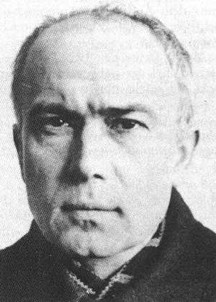
Let me tell you about two men who acted on this powerful call from Christ to store up treasure in heaven. On September 1st, 1939, the Nazi army massively invaded Poland and devastated the Polish army and the Polish nation. Very quickly the Gestapo began to round up any potential leaders of resistance. Fr. Maximilian Kolbe, a Conventual Franciscan, was running the largest religious house in the world, an active publishing apostolate, and even a radio station. Very quickly he and some of his friars were picked up and put in prison. After some months of mistreatment and intimidation they were released. They went right back to publishing and evangelizing, so in February of 1941 they imprisoned him again, this time he was sent to the Auschwitz concentration camp. In late July that summer, a prisoner escaped from his barracks, and in retaliation the Nazis selected 10 prisoners at random to be starved to death. All the prisoners were standing at attention, and the men were singled out. One of them, Polish Sergeant Francis Gajowniczek, cried out in agony over his wife and children who would be left behind. Fr. Kolbe stepped out of line, and act that by itself would normally have resulted in immediate execution, and offered himself in Francis’ place, saying, “I am a Catholic priest. I would like to take his place, because he has a wife and children.” The camp commandant was silent, and then accepted the exchange. The ten men were put in a standing cell and starved to death. For two weeks, as they died, Fr. Kolbe encouraged them to pray and to sing hymns. On August 14, 1941, the vigil of the feast of the Assumption, Maximilian was one of four prisoners still alive. His impatient captors executed him
Fr. Kolbe

by means of a lethal injection of carbolic acid and burned his body in the crematorium. 60 years later, on August 14th 2001, I was there in Auschwitz for a special Mass to mark that anniversary, a day which is now the feast of St. Maximilian Kolbe. Most of the beautiful work that St. Maximilian did in this world was destroyed… his friary was disbanded, his publications silenced, and he himself was killed. But his life is not a source of discouragement and depression,rather it is a beacon of great hope. Surely Auschwitz was one of the darkest places in all of human history, where over a million people were snuffed out and burned up. Yet, even there, a man of faith did not become part of the evil, rather he chose to freely offer himself for a stranger. Even as he was being starved to death, he prayed for his captors and forgave them. The man he
Francis G. & his wife
saved was reunited with his family and lived until 1995. He was present at both the beatification and the canonization of St. Maximilian, he testified during his entire life to his gratitude at the gift of life given to him. St. Maximilian Kolbe’s life not only bore a rich harvest in eternity, but even here in this world.

As a recent college graduate visiting Auschwitz, I was enormously grateful to see it in light of Kolbe’s life. With just the facts as they are normally stated, I think I would have left Auschwitz depressed and saddened at man’s inhumanity to man. In light of St. Maximilian Kolbe, I left there inspired and challenged to follow the Lord, confident that in Christ all circumstances could be overcome, even if that meant mortal death.

On the other side of the border, in Austria, we have another example of this kind of courage, of this seeking treasure above all in heaven. Franz Jägerstätter was raised in a small farming village, and after a wild life in his 20’s, he came home, settled down, married, and began the difficult task of raising his family as a peasant farmer. When the Nazi’s took over Austria, he voted against this, and was public in his resistance. Eventually he was drafted into the Nazi army, and he refused to serve. Not long after he was taken into custody, he was executed. In 2004 he was beatified.

And so the challenge comes to us… do we allow ourselves to be absorbed only in the good things of this world? They are good, just as God created them to be, but they are not God, and they are not our eternal destiny. We will return to dust, we will stand before the Lord’s throne, we will at that moment see clearly that many of the things that we have striven after here were not of the first importance. God offers you and me grace today, through these words of scripture, through the lives of these saints. Here the words of Blessed Franz Jägerstätter:


 “Just as the man who thinks only of this world does everything possible to make life here easier and better, so must we, too, who believe in the eternal kingdom, risk everything in order to receive a great reward there. Just as those who believe in National Socialism tell themselves that their struggle is for survival, so must we, too, convince ourselves that our struggle is for the eternal kingdom.”


 By God's grace, we do not face imprisonment or execution for following Christ, but it is nonetheless a constant temptation for us to be drawn and absorbed entirely by the things of this world.  Do we raise our eyes to the heavenly kingdom?  Do we struggle to put first things first?  Many voices will happily encourage us to acquire, to consume, to have... but this will not bring lasting peace. The moral current of our society flows farther and farther from God... do we allow ourselves simply to be carried along?  Perhaps it is even more difficult to keep track of heavenly treasure when we face the gradual and subtle temptations of our time.


Here the words of St. Paul,
“Brothers and Sisters, if you were raised with Christ, seek what is above, where Christ is seatred at the right hand of God. Think of what is above, not of what is on earth.”
May we use the things of this world well, honorably, and with love. May we set our sights and our hearts on eternal life, especially as we prepare to receive our Lord and Saviour now!


+ A. M. D. G. +

Sunday, July 28, 2013

Lord, on the day I called for help, you answered me!

+ J. M. J. +


Homily Outline for the 17th Sunday of Ordinary Time, Year C

“Lord, on the day I called for help, you answered me!” These were the words we repeated multiple times in our psalm, and they frame the strong theme of our readings this Sunday… we are to call out to the Lord for what we need and what we desire. Jesus tells us in the Gospel:
And I tell you, ask and you will receive; seek and you will find; knock and the door will be opened to you. For everyone who asks, receives; and the one who seeks, finds; and to the one who knocks, the door will be opened.

Have you every worried that asking God for what you want or need is selfish? Have you ever thought, well, maybe I had better just pray for other people? Here you have the Lord’s clear command: ASK, SEEK, KNOCK! And a promise: RECEIVE, FIND, the door will be OPENED.

In our first reading from the Book of Genesis, we see Abraham apparently bargaining God into sparing Sodom and Gomorrah. At first God offers to spare the cities if 50 righteous men can be found, and eventually Abraham gets Him down to ten! We see here both the mystery of our intercession, but also the fact that even the People of Israel took a while to understand how mysterious God really is! In the following chapter God’s angels manage to get Abraham’s brother Lot safely out of the city, despite the intense wickedness, sexual perversion, and violence of the people there, and then God’s judgment falls on the city. Our prayers have an impact, but God’s will is mysterious, and we never comprehend it fully.

On the simplest level, then, we claim that God answers prayers, and perhaps we have all had the experience of our prayers being answered. At the same time, though, we have probably had the experience of having our prayers apparently fall on deaf ears! Did you every pray for a blue bicycle when you were little, and it didn’t arrive? Or did you pray for the girl you had a crush on to sit next to you, and she didn’t? Or have you ever thought, to quote Garth Brooks, that some of God’s greatest gifts are unanswered prayers?

So, it’s clearly more complicated that it seems at first. One might conclude that prayers just make us feel good, but that’s not what we believe. On the other hand, we could avert our eyes when we see prayers not being answered, rather than face the difficulty head on. We are called, though, to the encounter between faith and reason, between revelation and experience.

This mystery of intercessory prayer involves the mystery of God’s infinite goodness, our limited vision, and our freedom. God is beyond our full grasp, beyond our full understanding. He has chosen to reveal Himself to us, most perfectly in Jesus Christ, and so He wants us to know Him. We are creatures, though, and so we cannot fully grasp our Creator, even as He reveals Himself to us. Part of the rich mystery of our creation is our real but imperfect freedom. We are truly free, even as we so often allow our freedom to be hemmed in by bad habits, sin, and even addiction. We often abuse our freedom by choosing away from God, and so we are enslaved to falsehood and sin. But where there is breath, there is hope, and where there is breath, there is some faint glimmer of freedom. As we see so much in the world around us that is counter to God’s will, we can easily ask whether God’s will is done at all! God has chosen to make us free, capable of love, capable of heroism, capable of holiness, and this then is necessarily a world where the opposite is possible: indifference, selfishness, and vice. The people of Sodom and Gomorrah rejected God, and we see our neighbors and friends reject God, and each one of us has also rejected God at some time and in some way. The world is broken not because God’s will is imperfect, but because we are, not because God wills evil, but because we do.

Even in the midst of this, though, God is always drawing us, calling to our hearts, offering us forgiveness and mercy, and offering grace and conversion even in the midst of disaster. On Thursday evening I received news of a terrible car wreck affecting some of my best friends down in El Salvador where I served in the Peace Corps, and where I visited just a couple months ago in May. My friend Antonio was taking most of his family to the airport to pick up his sister who was coming to visit, and they were in a wreck. Antonio died, along with both of his parents, and three of his five children. Two of his nieces and two of his daughters were injured, but survived. This sad news has been heavy on my heart and mind. This morning, before the funeral which took place with six caskets present, I was able to speak with the two daughters who survived, Nereyda, the eldest child, and Maria Jose, the youngest, who lost her twin sister Emely. I spoke with Antonio’s wife, Edith. She had not gone with them on Thursday. I was truly inspired by her courage and hope, even just talking to her on the phone. I assured her of the prayers of many people, and she spoke of the power of prayer, of her strong sense of being lifted up and sustained by prayer in these very dark days.


A picture taken this May when I visited my friends. From the left: Nereyda, who survived; I can't tell the two little twins apart, but one died, Emely, and one survived, Maria Jose; Edith, the mother, was not in the wreck; Lupita, standing in the pink shirt, died; Antonio, the father, died; myself; Cristian, on the right, died.  Not pictured are Antonio's parents, Antonio and Juana, who also died.  May they all rest in the peace of Christ.

Why would God allow such a thing to happen? My friends, we are truly free. God does not play games with us, as if we were marionettes. He does not tug on our strings, jerking us away from one disaster or another. It appears that Antonio may have fallen asleep at the wheel, but we will never know for sure. I am certain that God did not cause the wreck, and I am certain that our choices really do have consequences, some of them beautiful, some of them terrible. On Friday evening I prayed the Rosary for my friends, the living and the dead, in the dark church, and I gazed upon the crucifix, and I gazed at the tabernacle lit only by the vigil lamp, and I know that God was listening. My friend Edith now faces the task of nursing her two remaining children back to health, and of making a new life without her husband. In the midst of this she can feel the power of being lifted up by the prayers and love of many people, among them many she will never meet.

In this light, listen again to St. Paul speaking to the Colossians:

You were buried with him in baptism, in which you were also raised with him through faith in the power of God, who raised him from the dead. And even when you were dead in transgressions and the uncircumcision of your flesh, he brought you to life along with him, having forgiven us all our transgressions; obliterating the bond against us, with its legal claims, which was opposed to us, he also removed it from our midst, nailing it to the cross.
Jesus is God’s answer to our prayers. Jesus is God Himself come into our midst, shouldering our burdens, nailing them to the Cross. In Jesus our freedom is redeemed, and the path to eternal life is opened before us. In Jesus our prayers are answered, even when we can’t see when or how. We come to this altar now, with all of our needs, some of them buried deep in our hearts. We come with our hope, with our sorrow, with our fears, with our dreams. We receive from this altar the Lord Himself. We call out to Him for help, and He answers us by offering us His own flesh and blood.


I dedicate this homily to the memory of my six friends who died on Thursday: Antonio hijo, Antonio padre, Juana, Cristian, Lupita, and Emely. May they rest in the peace of Christ. Que en paz descansen.

+ A. M. D. G. +

Sunday, July 21, 2013

Unum est necessarium… is the one thing first in your life?


+ J. M. J. +


Homily Outline for the 16th Sunday of Ordinary Time, Year C


Recently I spoke to someone who had a very large number of family members visiting over the 4th of July, and she described how tired she was after the visit! Sometimes it is said that the only thing better than seeing your guests arrive is seeing them depart! Where does this weariness come from? It is precisely from the offering of authentic hospitality: when a guest enters our domain, however humble, we become in a certain measure responsible for them, for their welfare, for their comfort. There is a certain pride in this, in offering what we have, however small. One of the hallmarks of Middle-Eastern culture all the way back to the Old Testament is a very strong sense of the care and respect to be shown to a guest.

And so these three strangers arrive in the heat of the day at Abraham’s tent. Notice how the place is named because of the presence of a single tree, the terebinth of Mamre! This is a desert land where vegetation is scarce, and where a traveler is very much at the mercy of his host. Perhaps this very vulnerability is what sets up such lavish hospitality. Abraham runs to them, greets them with great deference, and prepares a feast to them. Notice his haste, notice the lavishness of the feast. It is one thing to take something out of the freezer, quite another to immediately butcher an animal. When the food is ready, Abraham doesn’t preside at the banquet, rather he serves the guests while they eat. In light of Abraham’s hospitality, a blessing is bestowed upon them, that Sarah will conceive a son!

In the Gospel we see this generous reception offered to Jesus. Martha and Mary both welcome him, Mary listening at His feet, and Martha preparing the meal. As faithful Jewish women, they offer their guest hospitality, a warm and generous reception. Jesus embraces all the goodness of the Jewish culture and the Old Testament, but then purifies and fulfills it. If Martha and Mary were both to imitate what is best about Abraham and Sarah’s hospitality, it seems that they both should have hurried about preparing and serving. Yet Mary, rather than rushing about, is absorbed and attentive at the Lord’s feet, listening. I think most of us can very much understand Martha’s frustration. She approaches the Lord with a certain boldness to complain! Jesus doesn’t rebuke Martha, He doesn’t get angry with her or denigrate her anxious hospitality; rather, He calls her deeper, not only to what is good, but to what is best. “Martha, Martha, you are anxious and worried about many things. There is need of only one thing. Mary has chosen the better part and it will not be taken from her.”

Let those words sink in, “There is need of only one thing. Mary has chosen the better part…” As I gaze upon you and as I look within my own heart, I know God sees the many different holy things which occupy us: our parents, spouses, and children, our work, the upkeep of our homes and cars, our legitimate hobbies and recreation. As I picture my inbox, my office, my calendar, they are full to the bursting with many things. As we pause to pray, our hearts and minds are often full of many things. Jesus does not condemn all these legitimate duties as evil. God has created all things, and no thing is in and of itself evil. But, what about the one needful thing? What about not only good or better but best? What about priorities? Jesus doesn’t harshly rebuke Martha, or level withering criticism, but He does gently correct and invite her to something deeper, something more. God calls us to Himself, He desires to give us Himself. As He has created all things, as He constantly sustains us in existence by love at every moment, God desires us to offer ourselves to Him: not just our work, our efforts, our results. He is not a pagan idol that must be fed lest it become fractious and discontented. First and foremost God wants us to give Him ourselves: our minds, hearts, souls, attention, and our deepest desires. He wants us to gaze into His Face, to sit at His feet listening to Him speak.


Mysteriously, we are not only to give hospitality to God Himself, but even to welcome all that comes in His name. St. Paul speaks of rejoicing in his sufferings, confident that they are united with the afflictions of Christ, confident that God is at work even in the midst of his own failure, weakness, and pain. By our baptism we are united with Christ in all things, even the Cross and our crosses. When we receive as from God’s hands all that comes, and when we offer it back to Him in the intimacy of our daily prayer, then Christ is in us, and as St. Paul says, here we find hope for glory… hope for the final victory and joy and peace of heaven. God longs for us to entrust into His hands all that is in us, good, bad, ugly... to unite all things to the Cross.

This Gospel passage is special to us in the Diocese of Marquette: Venerable Frederic Baraga chose it as his Episcopal motto, using the first part of the last verse. In Latin, “Unum est necessarium,” in English, “There is need of only one thing.” Bishop Baraga was par excellence a man of action! He pushed himself and all those he worked with to the very edge of their physical and spiritual limits. He had an intense sense of the urgency of the mission, the great need for the Gospel. In 1841, then Fr. Baraga was in LaPointe, on Madeline Island in the Apostle Islands, and he made a renewed and deeper commitment to give the Lord two or even three hours in meditation each morning. He was 44 years old, and had been in the mission fields of Michigan for about 10 years. The true immensity of the daunting task before him was clear. Bishop Baraga didn’t doubt the need for vigorous and sustained action and zeal, but he realized that his own resources were radically inadequate. He realized that unless he sat at the Master’s feet, he would not be able to sustain the Master’s work. He acted on the insight that unless he was in intimate friendship with the Lord, he could not propose to invite others to that friendship. Until the very last days of his life, some 27 years later, he remained faithful to this commitment to daily morning meditation.


Certainly none of us here face the same physical hardships that Bishop Baraga did, nor are we entrusted with quite the same vast spiritual responsibility: to serve the people from the Northern Lower Peninsula all the way to Northern Minnesota! Nonetheless, the same basic challenge lies before us: as we recognize God’s call to love our families, to perform our daily work with integrity and zeal, to be salt, light, and leaven in our broken world, do we attempt to answer that call and to do that work out of our own resources? How often do we feel harried and stressed out and angry? There is need of only one thing… and how easily we avoid or ignore or postpone it! God calls us first to intimacy with Himself, first to give Him some jealously guarded and defended time of prayer and attention, and then out of that we are empowered and equipped to fulfill our many obligations. Indeed the person who seeks God first will do more and do it better! The person who loves and listens to God first will love and listen to those around them more and better.

We come today not only to sit at Christ’s feet, but to receive Him. May we open our hearts now, may we choose the one needful thing, and receive abundant grace from God.


+ A. M. D. G. +