Sunrise on Keweenaw Bay

Sunrise on Keweenaw Bay

Saturday, February 23, 2013

Glimpsing Heaven's GLORY, may we worship God, NOT our bellies!

+ J. M. J. +

Homily Outline for the 2nd Sunday of Lent, Year C

One could perhaps sum up the great narrowness and poverty of our modern world, a poverty that often leads to bitter emptiness in the midst of material plenty, with one simple phrase: “Seeing is believing.” As our technology has given us enormous material power, we have reduced knowledge to that which we can measure physically. Our lives are more comfortable and prosperous than previous generations could ever have imagined… think of what shoveling was like for our grandparents! These advances have also given us terrifying power to destroy, and we have used that power wantonly in the last century, and continue to use it now, especially against those brothers and sisters of ours who happen to be still in the womb. We are enormously wealthy and comfortable, full of food and entertainment, and yet so often bitterly empty, sad, confused.

Even as we have artificially limited knowledge to what we can touch, we still know most things on the basis of the testimony of others. To take a famous philosophical example, “England is an island.” Unless you’ve paddled around her shores, you’re trusting other people’s testimony! The number of planets, the Big Bang, the composition of the plastics that surround us… very few of us actually understand those things to the point that we could explain, demonstrate, or prove how they work, and yet we trust the testimony of those who do. We think of ourselves as living in a world that bases its decision on proof and data, but this is a tale we tell ourselves, a charade… we continue to operate on the testimony of others, while pretending that it’s all about the cold hard evidence.

During this Lenten season, we open our minds and hearts once again to the mystery of God, and perhaps by identifying this very modern prejudice which we absorb from the cultural air we breathe, we can return once again to God, and abandon modern idols that lead us to self-destruction.

In our first reading, Abram cut a covenant with God. That is the Hebrew idiom - and we see why - the animals that have been sacrificed are cut in half. To walk between those halved carcasses implied, “May God do thus and so to me if I break this covenant.” Strangely, now it is God who is making this promise, this covenant with Abram, God who passes between the carcasses. These circumstances are replete with mystery, and not least is the fact that apparently, at the beginning, God takes Abram outside to look up at the sky… and then some time later the sun sets! “Look up at the sky and count the stars, if you can,” says God to Abram, “Just so shall your descendents be.” How many stars can you see in mid-afternoon? And, yet, God calls Abram to trust Him, and later God will change his name to Abraham. “Abram put his faith in the Lord, who credited it to him as an act of righteousness.” Some time later the sun sets, and Abrams sees that fire pot and flaming torch pass through the carcasses. He is promised a land, and a people, offspring like the stars, even as he cannot see them. Now you can see vividly why we call Abram “our forefather in faith.” He is given a glimpse of God’s power and glory, but he must trust and believe without seeing fully.

Our psalm echoes this theme: “The Lord is my light and my salvation.” In light of God’s faithfulness to us, we trust Him in mystery.
I believe that I shall see the bounty of the Lord in the land of the living. Wait for the Lord with courage; be stouthearted and wait for the Lord.
Here there is confidence, trust, and the mystery of God’s promises. For the Hebrew people, the “land of the living” was still a mysterious category… they had begun to realize that God’s promise included a land and a life beyond our mortal span, that one must wait on the Lord even beyond death, but this was shadowy and implicit until the coming of the Messiah.

Jesus shines the full light of day on God’s promises, and we see that magnificently in our Gospel, which tells us of the Transfiguration. It is traditionally believe that this took place on Mount Tabor, on the very spot pictured on the front of this Sunday’s bulletin. I had the privilege of praying there in December of 2007. Jesus took His closest disciples, Peter, James, and John up the mountain. From that mountain you can see a beautiful panorama of the Jezreel valley, perhaps the richest and most fertile land in all of Israel. From that vantage point, above the clouds, Jesus is transfigured. The veil of His human flesh becomes transparent to His Divine Glory; Peter, James and John catch a glimpse of the fullness of His identity, Jesus who is fully man, but also fully God, and they see Him conversing with Moses, and Elijah, who stand for the whole Law and all the Prophets. The curtain is pulled back and they see deeper into the cloud of mystery. They do not fully understand, and this is particularly clear when Peter in his exaltation and enthusiasm suggests that they could build each of them a tent! He wants to linger in this glimpse, but there is still a rugged road ahead, which leads to the Cross, not only for Jesus, but eventually also for Peter, and for each of us.

Why are Peter, James, and John given this glimpse? As Jesus converses with Moses and Elijah about His exodus, the great definitive Exodus through sin and death, that Exodus upon Calvary that breaks the bonds of sin and death and opens up the path to eternal life, these three apostles are fortified and strengthened for this path that they too will walk.

Brothers and Sisters in Christ, may this glimpse also fortify us, as we walk the path that leads to Calvary for each of us. May this glimpse broaden our vision, may we recognize that this world is deeply mysterious and goes far beyond what we can measure with our eyes and our instruments. If we will broaden our vision, lift up our eyes, by God’s grace and mercy we may perhaps avoid becoming “enemies of the cross of Christ.” These are strong words from St. Paul, but if anyone ever needed to hear them, it is us. How does Paul describe this enmity?
Their end is destruction. Their God is their stomach; their glory is in their “shame.” Their minds are occupied with earthly things.
Does that sound familiar? Our society obviously and even violently worships its stomach: we are told we must obey our most broken impulses and desires. Every day, as we consume hours of media which is designed to train us as docile consumers who respond to every exhortation to “buy now,” we truly worship our desires, and often pay the greatest homage to the lowest among them, lust and sloth and gluttony. We have been educated and trained to trust only that which we can grasp and have and consume right now. This Lenten season is a God-given and desperately needed opportunity for each of us to fight against these velvet subtle shackles that have truly turned many of us into mere slaves. A glimpse of heavenly glory, a glimpse of eternal consequences can serve us, too, to strengthen us for the battle.

God did not make us only for this mortal world, but for eternal life and glory! Having described the reign and kingdom of sin, St. Paul continues:
But our citizenship is in heaven, and from it we also await a savior, the Lord Jesus Christ. He will change our lowly body to conform with his glorified body by the power that enables him also to bring all things into subjection to himself.
As citizens of the glorious mystery of heaven, the adopted sons and daughters of the Most High God, we too are called to glory. May these weeks of discipline - of prayer, fasting, and almsgiving - train us, equip us, and strengthen us to broaden our vision and raise our eyes on high, may we strive not to merely satisfy our bellies, but may we strive for virtue and holiness and eternal life. May the infinite gift of Jesus’ glorious Body and Blood strengthen us for this daily battle and journey. Amen.

+ A. M. D. G. +

Sunday, February 17, 2013

In the Desert with Jesus, Face to Face with Mortality, Immortality


+ J. M. J.+

Homily Outline for the First Sunday of Lent, Year C

With Ash Wednesday this past week we have entered to Holy Season of Lent… many of you received upon your foreheads the ashes of humility and mortality, and you heard the words, “Remember that you are dust, and to dust you shall return.” These words were especially striking to me this year in light of several recent and very concrete experiences… about 3 weeks ago I caught a bad cold, boy does that remind you how weak you are! Then I had four difficult funerals in close succession: John Ballone, Ron Gehring, and Dave Lynott, and then Fr. Jim Challancin’s funeral in Ishpeming. All four of these men died before their time. Two fought cancer, one died after heart surgery, and one after a tragic bicycle accident. Three of them I knew well and counted as friends. I don’t mean to detail this as a downer, for indeed every one of those funerals was grace-filled for me personally, and I hope for the families and friends of these four men. It may surprise you, but I actually enjoy celebrating funerals in this sense: I very much see the Lord at work in the liturgy, in the prayers, in the community, and in the Word of God. It is always a privilege and a blessing for me as a priest to be able to accompany a family through these rites, even as it is often difficult. It is a joy when the family desires the full funeral rites, as was the case in all four of these funerals, because I see how helpful and fruitful they are, from the vigil service and visitation the night before, through the Funeral Mass, and eventually the graveside service and burial. At each step we come face to face with death, a reality we MUST face, a reality we WILL EACH encounter. But as we encounter death, we also encounter the Lord’s grace and His promises to us.

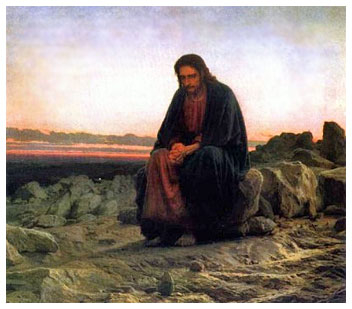
The people of Israel were enslaved in Egypt, even as their nation grew strong and numerous. God led them to freedom through the Red Sea, but also into the desert. God’s power freed them, but their hearts, minds, and souls were still attached to the comfort and idolatry of Egypt. They had to be purified in freedom as they wandered in the desert, where the very emptiness and poverty allowed them to come face to face with themselves. In our first reading Moses is telling the people how they are to give thanks for this rescue and purification with a sacrifice of the firstfruits of their harvest, remembering what God had done. Likewise, every Sunday, we gather here on this first day of the week to offer God our whole lives, these firstfruits, these first minutes and hours of the week. In Lent, in particular, we are called also to experience our mortality and poverty face to face. We see this reflected in the simplicity of the liturgy: simpler music, simpler decoration, the absence of the Gloria and the Alleluia, the absence of flowers. And those ashes on our foreheads and the words that accompany them remind us that we have here no lasting home, that this earthly dwelling place will indeed come to an end, both our bodies, and this whole world. We are pilgrims and sojourners, not citizens of this mortal world.

Let me reiterate… this reflection on mortality is simply an acknowledgement of reality, of the bare facts! We will die… I will die, you will die, and we will stand before the Lord. A fact! The Church wants us to remember so that we will keep both the joys and the sorrows of this life in an eternal, a heavenly perspective! Not so that we will be grim and mope around, but so that we can joyfully give thanks for the blessings of this mortal world without worshipping them and becoming enslaved. And here we see the role of fasting, and here we see why Jesus went into the desert! Now, I suspect no one here is going to have a heart attack when I tell you I’m not very good at fasting! When I was in college, I would try not only to abstain from meat on Friday’s during Lent, but also to fast! I still try to do so. However, I remember not a few Lenten Friday’s at Purdue when I would eat only a little bread and drink only a little water all day… but then as midnight approached I would order the Papa John’s pizza special! Yikes! Even at the time I knew that wasn’t quite the full spirit of fasting!

One thing we discover when we fast, whether it’s from pop or coffee, or sweets, or TV, or Facebook, or fill-in-the-blank… one of the things we discover is how weak we are, how conditioned by habit, how attached we are to small things! Jesus was not broken by sin as we are, He was free from the weakness of the will and the darkness of the mind that flow from original sin, but when 40 days had passed in the desert, He was hungry, and at least on a physical level, He had to have been very weak. At this moment the Enemy arrives, sensing this weakness, perhaps unsure about who this man really was, but desirous of testing and tempting Him, and perhaps corrupting and controlling Him.

The devil tries first to get Jesus to use His power for His own convenience and comfort… to turn the stone into bread. Perhaps the devil, Himself a liar and a thief, interpreted Jesus’ refusal as an admission that He couldn’t do it, because next the devil offers Jesus power if only He will worship Him. One little bow, one little tarot card, one little horoscope, one little amulet or charm, and power will be yours! One little lie, one little compromise at work… just look the other way, and promotion or a pay raise opens before you. These temptations still exist, my friends. Do not imagine that our Gospel today tells us merely some myth or cartoon legend.

Jesus once again refuses to bite. Again, perhaps the devil was emboldened… Jesus doesn’t say, “I won’t worship you because I’m God.” So the devil brings Jesus to the high parapet of the Temple, and invites Him to manipulate God, to force God’s hand… throw yourself down and the angels will catch you. He even quotes Scripture…the Word of God can be manipulated for false purposes. Jesus is steadfast… He will not put God to the test. The devil goes away, but notice what the Gospel says, “he departed from him for a time.” When once again the devil sees Jesus weak, trembling in His humanity before the prospect of the Cross, once again He will test and sift Him, and His followers.

During this Lenten Season, as we embrace prayer, fasting, and almsgiving, the Church calls us into training, and to know of our weakness. Jesus has passed through this road ahead of us, and we emulate His self-sacrifice. We enter into the desert, clearing space and fighting against our petty weakness and habits. We seek to know not only a desire for chocolate or TV, but even a desire for God that lurks in the depth of our hearts. Let me close with these hope-filled words from our 2nd reading… St. Paul quotes Deuteronomy,
“What does the Scripture say? ‘The word is near you, in your mouth and in your heart.’” 
May this be all the more true of us of during these days of Lent: may God’s word be in our heart and on our lips at every moment. May we pray, fast, and give alms in love and charity. May we know our weakness, and God’s strength. May we know our mortality, and the eternal life we are offered at this altar.

+ A. M. D. G. +

Sunday, February 10, 2013

Why did God call us?

+ J. M. J. +

Homily Outline for the 5th Sunday in Ordinary Time, Year C

Last Sunday God called Jeremiah, and today He calls Isaiah! Clearly the Church, our loving Mother, wants us to reflect on God’s call to us! Isaiah describes a vision of grandeur and glory, a glimpse of God’s throne. Indeed, this is the very passage, the very verses, from which we take the opening words of the Sanctus, the Holy Holy Holy… with the angels, at every Mass, we too proclaim, “Holy Holy Holy is the LORD of Hosts! All the earth is filled with his glory!” Think of that… from about 700 years before Christ to the present, those words have been on the lips of God’s people!

When Isaiah beholds the Glory of God’s Throne, he is filled with fear and trembling! To behold God face to face was understood by the Jews as something that could destroy a person. God’s goodness and light it so far beyond our comprehension, so far beyond our own divided hearts and often darkened minds… brighter than the most powerful neutron bomb, a fire of love hotter than the core of the sun. So, Isaiah is overwhelmed, “Woe is me, I am doomed! For I am a man of unclean lips, living among a people of unclean lips; yet my eyes have seen the King, the LORD of hosts!”

What Isaiah perceives is true… before God’s perfect glory and beauty he IS a man unclean and unworthy! Can we take possession of this important insight? What we recognize in our heart of hearts, if we are honest with ourselves, is true… we have fallen short, we are in need of God’s mercy! We cannot presume to claim His love and mercy as something we have acquired or earned, for we have unclean lips and minds and hearts and hands.

But then, one of the seraphim flew to Isaiah with a burning ember that came from the altar, and the intense and glorious fire of God’s love touched Isaiah’s mouth, and the angel said, “See, now that this has touched your lips, your wickedness is removed, your sin purged.” In the midst of God’s glory, Isaiah recognizes his own iniquity, but then God sends His perfect grace and mercy by the hand of an angel, and that iniquity is burned away! Do you hear the echo here of the gift we too will receive upon our lips from this altar, a gift that will burn away falsehood in our hearts, the gift of the Lord’s Body and Blood!

I mentioned last weekend the way the First Reading and Gospel are chosen for us as a pair, do you see the connection? As the crowd presses in upon Jesus, He preached to them from Simon’s boat. Simon’s hears His authoritative word, and then when Jesus tells them to put out into the deep, they obey, even though they had fished all night. Their net is filled, and Simon Peter beholds the glory of God… Jesus has not only spoken the truth, but He has filled their nets, their hearts, their hands with His goodness, concretely here this miraculous catch of fish! As Simon Peter beholds God’s glory present before him, he responds just as Isaiah did… he becomes deeply and viscerally aware of his own inadequacy! He falls to his knees and says, “Depart from me, Lord, for I am a sinful man.”


Why did God call Isaiah? Why did He call Simon Peter? Why did He call me, or you? He did call us, otherwise we wouldn’t be here! But notice well, He did not call us because of our worthiness! If we look within our hearts, we see our own weakness, our sinfulness, the lukewarmness of our response to God’s amazing gifts to us. If we don’t see that, we need to open our eyes! But when we do see that, in honesty, we can very well ask the question, “Lord, why me? I’m a mess in some pretty significant ways!” And, like Peter, like Isaiah, we can even be tempted to say, “Lord, I am doomed, I am unclean, depart from me, find another worthy of your love, your call.” But as that naturally and authentically rises up in our hearts, there is a very fundamental mistake right at the heart of that impulse… GOD HAS NOT CALLED US BECAUSE OF OUR GOODNESS, BUT BECAUSE OF HIS GOODNESS!  This is not a statement of pessimism, or self-reproach, or false humility, but simply a statement of truth! Left to our own devices we would be overwhelmed by our faults and failures! Notice how St. Paul embraces this so humbly in our Second Reading:
Last of all, as to one born abnormally, he appeared to me. For I am the least of the apostles, not fit to be called an apostle, because I persecuted the church of God. But by the grace of God I am what I am, and his grace to me has not been ineffective.
St. Paul gets it! By God’s grace we have been called, by God’s grace we are here, and His grace to us has not been ineffective! This recognition frees us to respond joyfully and generously, not out of any sense of having earned God’s grace but out of the peace-filled recognition that God offers us life and mercy and vocation out of His superabundant love!

This week with Ash Wednesday we will enter into the Holy Season of Lent: 40 days of preparation for the joy of Easter. This is a blessed and holy time, a time when Jesus offers to step into our boats in a new and deeper way. If we will keep Lent well, with generous hearts, God will deepen our sense of His call to us, He will reveal the path He calls us to walk, He will fill our nets with His abundant harvest. He will say to us, as He said to Peter, “Do not be afraid, from now on you will be catching men.” He will say to us as He said to Isaiah, “Whom shall I send? Who will go for us?” During this Year of Faith, in particular, the Church invites us to look within, and to listen to God’s call to us once again. Out of our baptism we are called, we are empowered, and blessed. With God’s help we can respond as Isaiah did, “Here I am, send me!”

+ A. M. D. G. +

Sunday, February 3, 2013

Evading the Truth, Avoiding the Truth, Speaking the Truth in Love

+ J. M. J. +

Homily Outline for the 4th Sunday in Ordinary Time, Year C

Our readings today begin with Jeremiah’s call from God to be a prophet. God’s word came to him:
Before I formed you in the womb I knew you, before you were born I dedicated you, a prophet to the nations I appointed you.
From before the moment of his conception, God had known and loved Jeremiah, and had given him a particular task, a particular vocation. We don’t hear the whole chapter of course, but Jeremiah objects at first… he says to God, “I’m too young, I don’t know what to say.” God is having none of it… “I will give you my words,” He tells him. God calls us and equips us to speak the truth in love. The prophetic mission has now come to all people in Jesus Christ. By our baptism we have become priests, prophets, and kings. We may not feel strong, or that we have the words, but God calls us all the same! We must speak the Truth of Jesus Christ to the world.

Very often, though, the world is resistant to hearing that truth. God is forthright with Jeremiah about the obstacles he will face. He tells Jeremiah that He will make him:
a fortified city, a pillar of iron, a wall of brass, against the whole land: against Judah’s kings and princes, against its priests and people. They will fight against you but not prevail over you, for I am with you to deliver you, says the LORD.
This is not going to be easy -Jeremiah will face resistance! God doesn’t tell him it will be a walk in the park… but he does tell him that He will make him strong in the face of rejection.

It is hard to hear the truth, we all have mechanisms to resist it. One of the most effective is to point out the weaknesses of the one bearing the message! When someone tells us a truth that is difficult to hear, we readily zoom in on their every flaw, using the messenger’s faults as an excuse to doubt the message.

Here we see the second half of the equation: as sharers in Christ’s prophetic mission, we must hear and speak the truth in love. If we don’t speak the truth in love, we don’t speak the truth. We’ve all used the truth as a stick to beat someone with, or been beaten with it ourselves. The truth abused in this fashion loses its truthfulness. The two must always go together: the truth told lovingly, and love offered in truthfulness. If we grasp one without the other, we necessarily lose both together.

Imagine a husband whose wife drinks too much. It would be very easy to fly off the handle and berate her and holler and tell her that she’s drinking too much. The statement might very well be accurate, but the unloving way in which it’s delivered would give the wife many excuses to ignore the message. The truth offered unlovingly is unlikely to be accepted, and in fact loses something of its truthfulness.

On the other hand, imagine a guy whose buddy is running around with another man’s wife. That’s a hard thing to challenge someone on, and it might seem that in friendship he shouldn’t judge. However, there’s no love in lying to someone, or in approving something false. If that friendship is to remain authentic, the issue must be raised, even if that’s difficult.

Imagine a mother whose daughter is planning to get married outside the Church, without the Church’s blessing. It would be relatively easy to hit either extreme… to quietly go along with a path that leads away from Communion, away from God’s grace, away from the faith, or to fly off the handle and alienate the daughter. With God’s grace, it might be possible to lovingly and gently challenge and invite her to reconsider. The result is not guaranteed, but the path of truthful love and loving honesty is the path we are each called to walk.

Paul captures this mystery beautifully in our second reading… a passage that may often provoke warm fuzziness, when it should really challenge us to take a tough look in the mirror and ask if we’re really loving in truth:
If I speak in human and angelic tongues, but do not have love, I am a resounding gong or a clashing cymbal. And if I have the gift of prophecy, and comprehend all mysteries and all knowledge; if I have all faith so as to move mountains, but do not have love, I am nothing. If I give away everything I own, and if I hand my body over so that I may boast, but do not have love, I gain nothing.
As your pastor, this challenge is always before me: how do I teach you well, in the fullness of truth, and in the fullness of tender love? How do I address many of the lies that our culture tells us? To be silent is not an option, and yet I often see in my heart the fear of driving people away, or of stating the truth unlovingly.

Jesus Himself encountered this struggle… the people of his hometown were amazed at what he said, but they second-guessed it as well, “Isn’t this the son of Joseph?” They thought they knew all about Jesus and his family. When Jesus challenges them on this, rather than listen, they push back, they react with fury, and they try to kill him. Perhaps we’ve never lashed out violently at one bringing us a truthful message, but I think we can all identify the games we play to discredit or ignore a tough truth that strikes us to the heart.

This same dynamic is very much at play in our public moral conversation. If one has the courage to speak out on the tough issues of abortion, or same-sex marriage, or euthanasia, you run the very real risk of being called hateful, or judgmental, or a bigot, or hard-hearted. It certainly possible to speak of these issues in an unloving way, but it is also clear that the issues themselves are not being addressed in all the name-calling.

May we ask the Lord today for the gift of hearts open to the truth, even when it is difficult or painful to hear, especially when it calls us to personal conversion and growth. Receiving the Word, receiving Jesus Christ who is Himself the Truth, may we be emboldened and empowered to speak the truth tenderly and lovingly. May we be messengers of God, and may our deeds and words speak of Him and His loving truth and mercy.


+ A. M. D. G. +

Sunday, January 20, 2013

Man do we need that Spirit of Fortitude!

+ J. M. J. +

Homily Outline for the Patronal Feast of St. Sebastian Parish

Brothers and sisters in Christ, it is a great joy to celebrate with you this, our patronal feast, the feast of St. Sebastian, martyr. In the life of the Church, each parish community is entrusted to the intercession, inspiration, and imitation of a particular saint or mystery of our faith. By God’s providence, love, and wisdom we have been entrusted to St. Sebastian, and so, since the founding of our parish well over 100 years ago, this relationship has grown. I’m afraid that in recent decades, in many communities, a vibrant awareness of that relationship with our patron saint has waned, and I was greatly blessed by my experience of Catholic life in El Salvador during the years I was a Peace Corps Volunteer. Every man, woman, and child knew of their parish and town patron, knew when the feast fell, and celebrated it with joy! Every Catholic ethnicity from which we have descended, whether Italian, or Polish, or Croatian, or Irish, or German, or French… fill in the blank if I’ve missed your ancestors!... every place had particular devotions and traditions to the saints. Our glorious stained glass at the back of the Church pays homage to those traditions, and reminds us of their ongoing validity. In our own time, we are just as much, if not in even greater, need of the intercession and inspiration of the saints, and by our very baptism we are called to follow their example! And, thus, St. Sebastian has been entrusted to us, and we to him! This is why our patronal feast is very rightly, by the liturgical law itself, allowed to displace even the Sunday liturgy, with its proper readings and prayers.

Listen carefully again to our Collect, our Opening Prayer, as it gathers together the Church’s desire for us on this feast:
Grant us, we pray, O Lord, a spirit of fortitude,
so that, taught by the glorious example
of your Martyr Saint Sebastian,
we may learn to obey you rather than men.
Through our Lord Jesus Christ, your Son,
who lives and reigns with you in the unity of the Holy Spirit, one God, for ever and ever.
It is a wonderful prayer that places before us a great challenge… to truly ask for and desire what is offered to us on this feast, and then to live out of that grace in union with the Most Blessed Trinity.

Let’s begin where the prayer begins… a prayerful request for a spirit of fortitude. Let’s face it… to actually and authentically live our faith each day isn’t getting any easier, and sometimes it seems like the forces arrayed against us are mounting! St. Sebastian was a soldier in the Caesar’s Praetorian Guard, and a devout Christian. As he engaged in acts of charity, and as he encouraged other Christians to be steadfast in the face of persecution and martyrdom, we can only imagine he was aware of his own peril. In our own time, we mark very sadly this week the 40th Anniversary of Roe v. Wade, and since that decision, well over 50 million children have been killed in their mothers’ wombs. On average, that’s something like 3500 abortions every day these 40 years. We see here how Blessed John Paul II was so on target in referring to the Culture of Death. It’s not popular to oppose the killing of unborn children, it’s not popular to offer healing and reconciliation to those who’ve had abortions… to offer reconciliation and healing it is necessary to admit that something bad happened! It’s not popular to promote Christian Marriage. It’s not popular to identify sin as sin and then to fight for virtue in one’s own life and in our broken world. And so, we truly need the gift and spirit of fortitude.

Our first reading is intense… the Greeks are trying to force the Jews to abandon their religion, and they have fallen to barbarous torture of 7 sons before their mother’s eyes. And, yet, with admirable fortitude, she encourages them:
Do not be afraid of this executioner, but be worthy of your brothers and accept death, so that in the time of mercy I may receive you again with them.”
We do not face such extreme circumstances in our country, as many of our brothers and sisters do in other nations at this very moment, but there is no doubt that to live our faith fully and authentically requires fortitude and courage. This must come not simply from our own resources but from God.

The call to be strong in our faith is not a call to be aggressive or violent towards unbelief or unbelievers. The call to be filled with fortitude is also a call to be filled with the Lord’s gentle mercy. Those who have had abortions must hear from us the truth that abortion is terribly wrong, but they must also hear the truth that God’s mercy is infinite, and they must find mercy in us as well. St. Peter gives beautiful advice on how we are to be ready to obey God rather than men:
Always be ready to give an explanation to anyone who asks you for a reason for your hope, but do it with gentleness and reverence, keeping your conscience clear, so that when you are maligned, those who defame your good conduce in Christ may themselves be put to shame.
A martyr chooses to follow God’s truth rather than the errors of men… a martyr chooses death rather than abandonment of God’s loving truth. We who may not face death must apply this to our own circumstances: Do we follow God’s truth without counting the cost? Do we love and forgive generously and freely? Do we speak of God’s truth in season and out of season? Do we acknowledge God before men, or do we keep silent?

The broken world in which we find ourselves today is full of men, women, and children who do not know the Lord, who have not encountered His Truth, who have not experienced His Mercy and Love. If they do not encounter God in us, where will they find Him? We are His Body, the Church, we are His Sons and Daughters, we are meant to be His voice, his hands, his feet. Terrible lies are working terrible suffering in our very midst… by God’s grace we must ask for the courage to fully embrace the truth, and then to act on it with love. On our patronal feast, on this feast of St. Sebastian, we ask God to fill us with the beautiful gift of loving fortitude, that we might follow St. Sebastian’s example, loving God and His truth without counting the cost. We prepare ourselves now to approach this altar from which we will once again receive the Lord Himself, Jesus Christ. All the grace we desperately need is about to be offered to us under the humble appearance of bread and wine.

+ A. M. D. G. +


Our Murky Water, Jesus' Fine Wine...

+ J. M. J. +

Homily Outline for the 2nd Sunday of Ordinary Time

Six stone jars were standing back in the shadows, something like 25 gallons apiece. They had held water for the ceremonial washings, but that was all long past… the feast was in full swing. A middle-aged woman, strangely serene and beautiful despite her obvious humility and poverty, a widow… she gestured to a group of servers, “Do whatever he tells you.” The servers shrug… theirs not to question why, but to follow orders, to serve. Ok, good enough, they filled the jars back up. More ceremony, more washings? Oh well… and then, a far stranger order from the woman’s son: “Draw some out now and take it to the headwaiter.” Now, head waiters are notoriously testy and dictatorial. I was the headwaiter my final year at the seminary, so I know what I’m talking about. People are always running up and asking nonsensical questions, or asking for special dishes… it’s easy to get a little short. The server shrugged again… who knows what the headwaiter will say when he’s brought a cup of plain water…

Think of the ordinariness of the people involved in this wedding feast, and the strangeness of these requests. Let me propose to you that God is very often, indeed, nearly always, at work in surprising and unexpected ways in the midst of ordinary events. God might even be at work in our midst!

The Wedding Feast of Cana, where Jesus performed His first miracle was understood by the Church Fathers together with the arrival of the Magi and the Baptism in the Jordan. Together, these three events show God’s presence in His world, Jesus’ presence, becoming more and more visible. First Mary, Joseph, John the Baptist, Elizabeth, then the shepherds, then the Magi, then those gathered at the Jordan to hear John preach and to be baptized, and now, all those gathered at this provincial wedding feast. God is revealing Himself, showing us who He is, and how he works.

In Jewish ceremonial washings, care would have been taken to use fresh pure water, and presumably that is what the servers used to fill those large jugs. What God does in us is even stranger… the water of our daily lives, our thoughts and feelings, our actions… this water is often not always fresh and pure. Sometimes it is murky and stagnant. Sometimes we find not the odor of sanctity, but the bitter stink of sin and falsehood. And, yet… even such water as this can be turned into sweet wine! We see it so often in the lives of the saints, many of them great sinners who were converted, like Augustine, like Mary Magdalene, like Francis of Assisi.

In our own time, the water that flows in our land and in our culture and in our lives is often troubled and impure water. The prophet begins today with these words:
For Zion’s sake I will not be silent, for Jerusalem’s sake I will not be quiet, until her vindication shines forth like the dawn and her victory like a burning torch.
Isaiah spoke to people who had seemingly abandoned God and His Law… people in exile and far away from their creator. He spoke to convict, to challenge, to convert, and to encourage. A wound that is unacknowledged is a wound that festers, a wound that infects. We live in a wounded land and a wounded culture. There are many layers to the lies we tell, but chief among them is the lie of abortion. Tragically, we mark this week the 40th Anniversary of Roe v. Wade, the Supreme Court decision that has led to the deaths of over 50 million children in their mother’s wombs, and the deep grief and pain of the mothers and fathers of those children. I was born in 1978, and so the Abortion Regime reigned over my generation. Perhaps 30% of the boys and girls I should have attended school with, boys and girls who should have been my friends, never made it to birth. For 40 years, an average of about 3500 abortions every day in our land. Like Isaiah, I could not serve you well or honestly if I was to keep silent. This is an awkward and painful subject to address… not unlike the rumors that must have spread through Nazi Germany about the concentration camps. Have you ever thought, “How did the Germans allow such a tragedy to happen?” Have you ever thought, “How come no one stopped Hitler?” The analogy is imperfect, but I cannot help but feel that future generations may well ask a similar question of us, “How did they allow such savagery?” How did they allow so many men and women to kill their children and wound themselves?

This wound is deep in us, and it is not a wound just in the cities, far away, affecting other people. Abortion has affected our lives, right here in this community. As a young priest, in less than 4 years, I have heard more than a few men and women confess to abortions, often decades after the event, and I have heard the profound pain in their voices, and seen the grief in their eyes. Just as much as I must speak of this for the children, I must speak of this for the mothers and fathers, and for future mothers and fathers. Many, perhaps most, of the people who have sought out abortions have found themselves in very difficult circumstances, but killing their child has not fixed the problems or improved those situations, but has merely added a deep wound to the other sources of pain and struggle.

It is hard for me to speak of this pain, hard to identify this Holocaust in our midst. We shudder at Schindler’s List, and yet we, we have killed or allowed the killing, of far more children then were every killed by the Nazis. This wound cannot heal if it is kept in the dark.

I often fear that those who have been party to an abortion only hear judgment from the Church and from God. We must identify the lie and the sin honestly, but we must also speak of God’s infinite mercy. Every sin can be healed and forgiven if it is brought to the Lord, brought into the light. Isaiah did more than identify the pain of his people:
No more shall people call you “Forsaken,” or your land “Desolate,” but you shall be called “My Delight,” and your land “Espoused.” For the LORD delights in you and makes your land his spouse.
By the Incarnation, God bound Himself to us much more intimately and completely even than the union between a husband and a wife. He took upon Himself our every burden, wound, and sin, and this includes abortion. The world tells us with a honeyed tongue that there’s nothing wrong, that it’s a necessary choice, but that honey carries bitter poison. God speaks to us with love, compassion, and identifies the wound, the sin, the hurt. He desires to draw us to Himself and to heal our wounds. He desires to take the often impure and turbulent water of our lives and transform it into sweet pure wine. The Lord can and will do this, if we will come to Him with open hearts, if we will follow His commands.

Let me close by entrusting myself, and each of you, into the hands of our mother, Mary. Jesus gave Mary to us as a spiritual mother from the Cross, He entrusted us to her care and protection. Mary models for us surrender of one’s life into the Father’s hands, and God brought about our salvation through her. We encounter in our Gospel today her last recorded words in Scripture, and they are words we should take to heart. She brought the servers to her Son and said, “Do whatever He tells you.” She speaks those same words to us. May we turn to the Lord now, conscious of our great poverty, our great need for His mercy and healing strength. With eager expectation may we open the door to His unexpected and surprising gift from this altar now, His own Body and Blood.

+ A. M. D. G. +

Saturday, January 12, 2013

Baptism - God's grace is free, but not cheap!

+ J. M. J. +

Homily Outline for the Feast of the Baptism of the Lord, Year C

Jesus first appeared in silence, gently, quietly, noticed only by a few. A lot of time has passed, so to speak, since the events of last Sunday’s Gospel… roughly 30 years! With Epiphany, the Magi arrived to pay Jesus homage shortly after His birth, and this Sunday we remember Jesus’ baptism in the Jordan by St. John the Baptist, His cousin. However, these two events, along with Jesus’ first miracle at the Wedding Feast of Cana were understood together by the Church Fathers as all part of the Epiphany… which, again, means manifestation. The Magi recognizing Jesus, the Father acknowledging Him at the baptism, and His first miracle at Cana together express the beginning of His public ministry, God’s presence in the world becoming visible. We know as a matter of faith that God is always and everywhere present in all things… but that does not mean that His presence is always obvious or visible to us.

One of the great mysteries of this feast is the very fact that Jesus chose to be baptized. John the Baptist recognizes that Jesus is greater than He, and yet, mysteriously, Jesus is baptized by him.

What is baptism? It is the first, the primordial, sacrament, and the gateway to all the other sacraments. We baptize, at the most basic level, in obedience to Jesus’ very clear command, “Go and baptize all nations in the name of the Father, and of the Son, and of the Holy Spirit.” Jesus told Nicodemus that, “No one can enter the kingdom of God without being born of water and Spirit.” Baptism is an integral part of how God intends us to be saved and sanctified.

What does baptism do? Like all the other sacraments, the outward sign expresses and brings about an inward reality. Three effects result from baptism. The person, normally a child, is welcomed at the door of the Church, a sign that they are being welcomed into the Living Body of Christ, the Church. They are washed with water in the name of the Father, the Son, and the Holy Spirit, and this effects a cleansing of their soul of the stain of original sin, and any actual sins they may have committed. Finally, by baptism we become the adopted sons and daughters of God, and we are to live as priests, prophets, and kings in our world. That is, we are to sanctify, teach, and serve our world so that it may be brought to eternal life. From our baptisms there flows an intrinsic call to holiness; to be holy as the Lord our God is holy. At baptism we are also given the gift of the Holy Spirit in an initial way… this is signified by the anointing with the chrism on the crown of the child’s head.

Note well, the person who is baptized is incorporated into the very life of God, and called to respond completely. However… baptism is the beginning, not the end, of the journey. God calls us to continual and ongoing conversion, and thus baptism opens the door to our being continually nourished and healed by the Eucharist and Confession. It would be nonsensical for someone not baptized to approach either sacrament, and at the same time, it would be very unwise for anyone baptized to absent themselves from either sacrament. Baptism is a free gift, unearned, and thus we can see how it can be given freely and lovingly even to babies and small children. But God doesn’t save us without us, without our cooperation and participation. Paul’s letter to Titus captures this beautifully:
The grace of God has appeared, saving all and training us to reject godless ways and worldly desires and to live temperately, justly, and devoutly in this age, as we await the blessed hope, the appearance of the glory of our great God and savior Jesus Christ,
God’s grace comes sweetly, gently, unearned… but then it immediately calls us, trains us, and empowers us to live temperately, justly, and devoutly.

We see here why the promises of the parents and godparents made at baptism are so important, and why the Church can’t in good conscience admit someone to be a godparent if they aren’t attempting to practice their faith. An infant or small child can only learn of Jesus Christ and respond to the gift of baptism if they are taught, and most importantly, if they are given a good example! Without this, they have indeed received the gift and become sons and daughters of God, but they have little opportunity to respond and learn and grow. Indeed, the Church very clearly instructs me as a priest who baptizes that I must have some founded hope that the child will be raised in the faith, or I must not baptize them. Baptism is not magic, nor is it merely a nice ceremony, but it is a gateway and door to a lifelong journey of growth and conversion.

With that foundation, though, how could Jesus, God and man, free from sin, how could He have sought out baptism from John? What possible reason or need could He have to be further purified, or further united with the Father? We see John the Baptist himself struggling with this mystery! Jesus, though, in His great humility, wisdom, and power, takes on the whole human condition, and is like us in all things but sin. He never sinned, but on the Cross He would bear the whole terrible burden of sin, and as He was baptized with John’s baptism of repentance, He took upon Himself our guilt and our repentance. How the Lord lowered Himself, How He humbled Himself, How He came among us as one like us! This is how much He loves us, How much He respects our precarious freedom, How much He invites rather than coerces! Long long before the Prophet had foretold such a Savior:
Like a shepherd he feeds his flock; in his arms he gathers the lambs, carrying them in his bosom, and leading the ewes with care.
Jesus shows us the way that we might follow, and by His grace and victory enter into His sonship. God the Father said of Jesus, “You are my beloved Son; with you I am well pleased,” and He desires to say that of each of us as well: “You are my beloved son, you are my beloved daughter.” He offers us infinite grace and mercy so that we may respond and live in such a way that He is well pleased by Faith, Hope, and Love at work in our lives. God has come, He has humbled Himself mightily, He has offered Himself to us, and will offer Himself to us once again at this Eucharist. May we respond generously and with joy!